
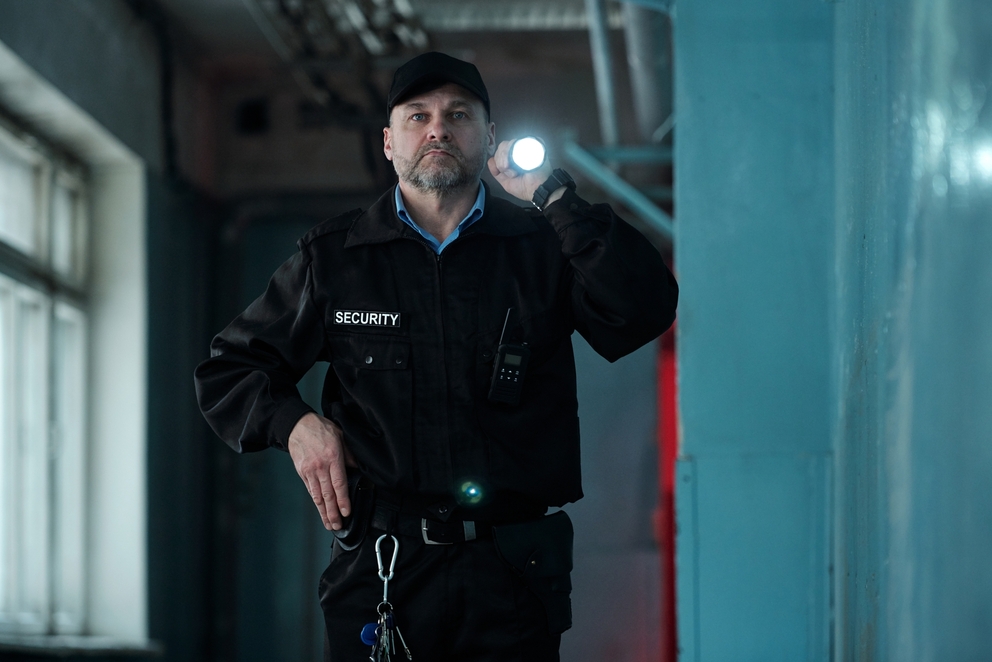
At 5 p.m. in winter, the parking lot can already be dark while employees are still inside. Add freezing rain, an unexpected maintenance call, or a delayed shift change, and a routine evening can require several decisions at once. A trained security guard gives the facility someone on site who can assess what’s happening, follow established procedures, and keep the security team informed.
A Sensitive Compartmented Information Facility (SCIF) is an accredited space where Sensitive Compartmented Information can be handled. Whether a SCIF occupies part of a commercial building or sits on a dedicated campus, guard services can support its approved security procedures. The guard’s duties, work areas, and authority are defined by the site. Office of the Director of National Intelligence, ICD 705
Keep access procedures consistent after dark
Winter weather changes who comes to a facility and when. A repair crew may arrive after hours, or an employee may need help at a staffed entrance during a storm. At designated access points, guards can verify credentials or visitor authorization as assigned, direct people to approved entrances, and refer exceptions to the designated security contact. An urgent service call can make it tempting to rush. A guard who knows the site’s procedures can keep the process moving while applying the same access rules.
Give the security team eyes on the ground
Cameras and alarms help bring conditions to a team’s attention. A guard can add context by observing and reporting what’s happening on site. During an assigned exterior patrol, for example, an officer might spot a failed walkway light or report that ice has made an approved entrance unsafe to use. If an alarm comes in, the guard can follow the site’s response instructions and relay observations to the people responsible for deciding what happens next. A clear incident report helps the next shift pick up where the response left off.
Plan for the storm before it arrives
Reliable winter coverage takes planning. Site leaders and their guard provider can agree in advance on who covers a post if an officer is delayed, whom to call if a power outage affects building systems, and how to adjust assigned patrols when conditions become unsafe. Officers who work outdoors also need appropriate cold-weather clothing, training to recognize cold stress, and access to warm breaks. Planning for those needs helps keep posts staffed safely through a long night. OSHA cold stress guidance
Put your winter guard plan to the test
Ask your security provider to walk through a realistic scenario with your facility security team. Freezing rain starts before shift change, the relief officer is delayed, and an emergency repair technician arrives at the staffed entrance. Who maintains coverage? Who confirms the technician’s authorization? Who needs to know what happened before the next shift starts?
Contact our team to discuss a winter guard coverage plan built around your facility’s approved procedures
If your organization is seeking professional security services to support a secure facility or high-security environment, National Protective Services is ready to help.
Visit www.npsva.com or call 703-379-7272 to learn more about how our security professionals can support your organization’s security objectives.