
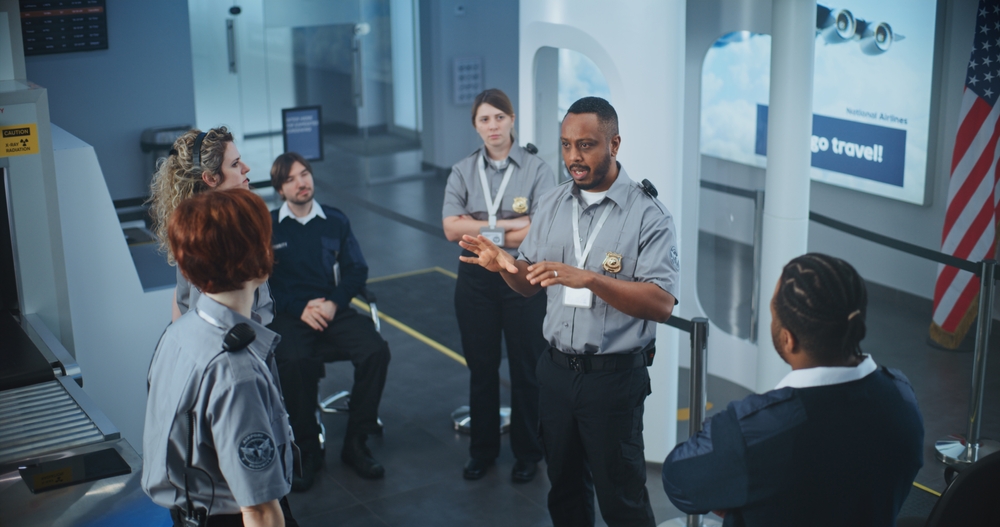
In a Sensitive Compartmented Information Facility (SCIF), security is about more than controlling who enters and exits the facility. It is also about being prepared to respond when the unexpected happens.
A fire alarm sounds. An unauthorized individual attempts to gain access. An officer notices suspicious activity. A medical emergency occurs. In each situation, the first few minutes can be critical.
For SCIF facilities, having trained security officers on site provides an important advantage: there is someone physically present who can recognize an incident, initiate the appropriate response, communicate with the right personnel, and help protect people and the facility while the situation is being addressed.
The First Five Minutes Matter
When an incident occurs, there is often little time to determine exactly what is happening. Security officers must rely on their training, situational awareness, established post orders, and facility procedures.
The objective is not necessarily to solve the entire incident within five minutes. Instead, the officer’s initial responsibilities are to:
• Recognize and assess the situation.
• Protect people from immediate hazards.
• Follow established SCIF and site-specific procedures.
• Notify the appropriate personnel.
• Control access and movement as required.
• Request emergency assistance when appropriate.
• Document and report the incident accurately.
A professional security officer understands that the first response should be deliberate, controlled, and consistent with established procedures.
Fire Alarms: Responding to an Immediate Hazard
A fire alarm demands immediate attention. Even when there is no visible smoke or fire, an alarm must be treated seriously.
A security officer can help initiate the facility’s established emergency procedures, communicate the alarm to appropriate personnel, assist with access and egress requirements, and coordinate with responding emergency personnel.
The officer’s physical presence is particularly valuable during an emergency. While facility personnel may be focused on evacuation or protecting their own safety, a security officer can help maintain awareness of the situation and provide information to responding personnel.
Importantly, officers should never take unnecessary risks or attempt to perform duties outside their training. Their role is to follow the facility’s emergency procedures and support the safe and orderly response.
Unauthorized Access: Recognizing and Responding to a Potential Security Breach
Access control is one of the fundamental elements of physical security within a SCIF.
An attempted unauthorized entry may be obvious, such as an individual attempting to enter without proper authorization. In other cases, the situation may be less apparent.
A security officer may encounter someone who:
• Does not appear to have the appropriate authorization.
• Attempts to enter by following an authorized individual.
• Provides inconsistent information about their destination.
• Attempts to bypass established access-control procedures.
• Becomes confrontational when questioned about access.
The officer’s response should remain professional and consistent with established procedures.
Rather than relying on assumptions or emotion, trained officers use observation, communication, and established protocols to determine the appropriate course of action.
The goal is simple: prevent unauthorized access while maintaining a professional and controlled environment.
Suspicious Activity: The Importance of Situational Awareness
Not every security concern involves someone actively attempting to enter a restricted area.
Sometimes the warning signs are behavioral or environmental.
An officer may notice an unfamiliar individual lingering near a controlled entrance, unusual activity around the facility, an unattended item, an unexpected vehicle, or activity that does not appear consistent with normal operations.
This is where human observation becomes especially important.
Technology can provide cameras, alarms, access-control systems, and other valuable tools. However, a trained security officer can observe the environment as a whole, recognize changes in normal activity, and determine when something deserves additional attention.
The officer’s first response should be to observe, assess, communicate, and follow established procedures rather than immediately assuming the worst.
Medical Emergencies: Protecting People First
A medical emergency can happen anywhere, including within a highly controlled facility.
Whether an employee, contractor, visitor, or other authorized individual experiences a medical emergency, security officers may be among the first people available to respond.
Their responsibilities may include:
• Calling or coordinating with emergency medical services.
• Notifying designated facility personnel.
• Helping maintain a safe area around the individual.
• Directing responding medical personnel to the appropriate location.
• Helping control access and movement around the emergency.
• Providing information to responding personnel when appropriate.
• Completing required incident documentation.
Security officers should operate within their training and should not attempt medical procedures for which they are not qualified.
Their value during a medical emergency often comes from being present, prepared, and able to coordinate an organized response.
Communication Is Critical
During an incident, communication can be just as important as physical security.
The security officer may need to communicate with facility management, security supervisors, emergency responders, law enforcement, or other designated personnel.
Clear communication helps ensure that the right people receive the right information as quickly as possible.
Officers should be trained to communicate important facts without speculation or unnecessary information. In a sensitive environment, this is particularly important.
The goal is to provide accurate, relevant information to the appropriate people while maintaining the security and confidentiality requirements of the facility.
Maintaining Control During an Incident
Emergencies can create confusion. People may move quickly, ask questions, or attempt to enter areas they normally would not access.
A security officer can provide an important measure of stability.
By remaining calm and professional, officers can help:
• Direct people according to established procedures.
• Maintain appropriate access control.
• Keep unauthorized individuals away from restricted areas.
• Provide information to emergency responders.
• Help prevent an already stressful situation from becoming more chaotic.
A security officer’s demeanor matters. Calm, confident communication can help employees and visitors understand that an appropriate response is underway.
Documentation After the Initial Response
The first five minutes may be the most immediate part of an incident, but what happens afterward is also important.
Once the immediate situation is under control, security personnel may be responsible for documenting what occurred. Accurate incident reports can provide valuable information for facility management and security leadership.
Reports should focus on objective facts, including what was observed, what actions were taken, who was notified, and what occurred afterward, in accordance with the facility’s reporting requirements.
Good documentation can help organizations identify trends, evaluate procedures, and determine whether additional preventive measures are appropriate.
Training Makes the Difference
A security officer’s response during an incident is not something that should be improvised.
Effective SCIF security depends on officers who understand their responsibilities, know their post orders, maintain situational awareness, and receive appropriate training for the environment in which they work.
The goal isn’t for a security officer to replace fire departments, emergency medical personnel, law enforcement, or facility management.
Instead, the security officer serves as an important first layer of response and coordination until the appropriate resources arrive and throughout the incident.
The Value of a Trained Security Presence
SCIF security requires more than technology and physical barriers. Cameras can record an event. Access-control systems can restrict entry. Alarm systems can alert personnel to potential problems.
But when an incident occurs, someone still needs to recognize what is happening and take appropriate action.
A trained security officer provides that human element.
Whether responding to a fire alarm, an attempted unauthorized entry, suspicious activity, or a medical emergency, security officers can help protect people, maintain physical security, communicate critical information, and support the facility’s established emergency procedures.
The first five minutes can set the tone for the response that follows. Having trained security professionals on site ensures that when the unexpected happens, someone is there to respond.
Protecting What Matters Most
SCIF facilities exist to protect highly sensitive information and operations. Protecting that mission requires a comprehensive approach to physical security—one that combines technology, procedures, training, and experienced personnel.
A professional security officer is not simply standing at a post waiting for something to happen.
They are observing.
They are prepared.
They are communicating.
And when an incident occurs, they are ready to act.
For SCIF operators and facility managers, that readiness can be one of the most valuable components of a comprehensive physical security program.
Learn How National Protective Services, Inc. Can Help
Every SCIF has unique security requirements, and choosing the right security personnel is an important part of protecting your facility, your employees, and your mission.
At National Protective Services, Inc. (NPS), our professional security officers are prepared to provide a visible, dependable security presence while supporting your facility’s established security and emergency procedures. Our team understands that effective physical security requires more than simply having an officer at a post—it requires professionalism, vigilance, training, and a commitment to service.
Would you like to learn more about how professional security officers can support your SCIF?
Contact National Protective Services, Inc. today to schedule a free consultation and learn more about the professional security services available for your facility.
National Protective Services, Inc.
703-379-7272
www.npsva.com
Let NPS help you build a security presence that is prepared to respond when it matters most.