
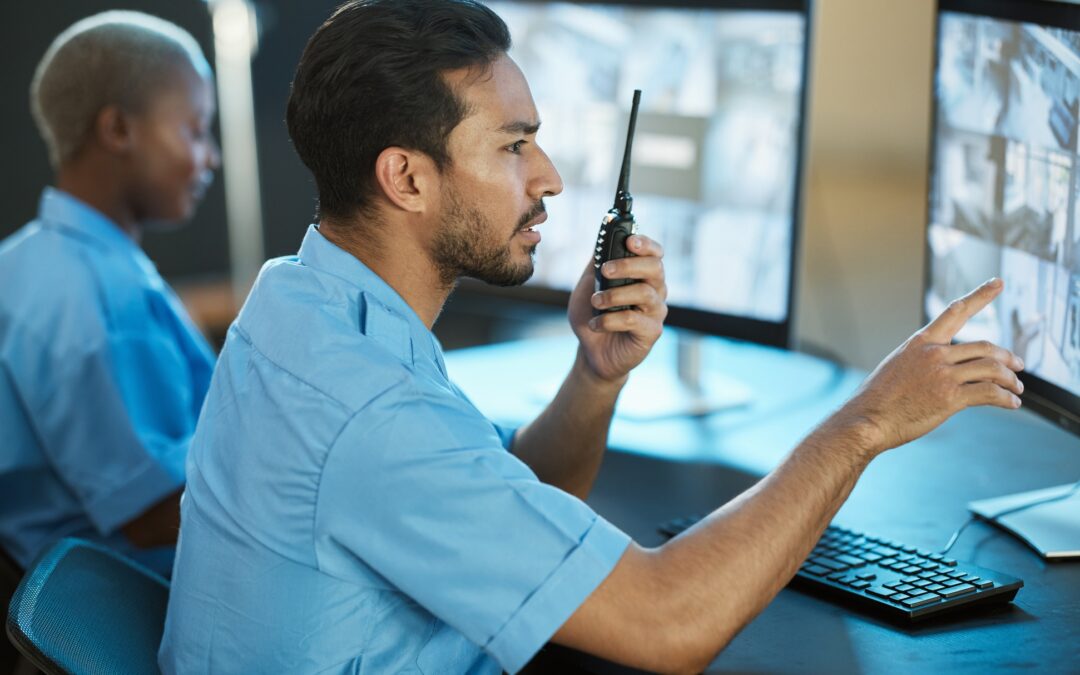
As Sensitive Compartmented Information Facilities (SCIFs) continue to evolve, so do the technologies designed to protect them. Today’s high-security environments often rely on sophisticated access control systems, biometric authentication, video surveillance, intrusion detection, and real-time monitoring software to safeguard classified information.
While these technologies are essential components of a comprehensive security program, they are only as effective as the people who operate, monitor, and respond to them. In SCIF environments, trained security officers remain an indispensable part of protecting personnel, facilities, and classified information.
The most effective security strategy isn’t technology or people—it’s technology working alongside experienced security professionals.
Technology Provides Detection—Security Officers Provide Action
Modern security systems are exceptional at collecting information. Cameras capture activity, badge readers track access, intrusion alarms identify unauthorized entry attempts, and analytics can flag unusual behavior.
However, these systems cannot make informed decisions in rapidly evolving situations.
When an alarm is triggered, a trained security officer can immediately assess whether it is a genuine threat, a maintenance issue, or a simple user error. They can investigate suspicious activities, communicate with facility leadership, coordinate emergency response, and implement established security procedures.
Without a qualified professional to evaluate and respond, even the most advanced security system can become little more than a source of notifications.
Human Judgment Cannot Be Automated
SCIF security often involves situations that require discretion, experience, and sound judgment.
Security officers routinely encounter circumstances that technology cannot fully interpret, including:
- Individuals attempting to tailgate through secured entrances.
- Visitors displaying unusual or suspicious behavior.
- Employees experiencing medical emergencies.
- Deliveries arriving with incorrect documentation.
- Contractors requiring escorted access.
- Unexpected maintenance personnel requesting entry into secure areas.
These situations demand critical thinking and adherence to security protocols—qualities that cannot be replicated by cameras or software alone.
Experienced officers understand when to escalate concerns, when to verify information, and how to respond professionally while maintaining security and minimizing operational disruptions.
Security Officers Help Prevent Security Incidents Before They Occur
One of the greatest strengths of an on-site security officer is their ability to deter security violations through visible presence and proactive engagement.
Professional officers routinely:
- Verify credentials and visitor authorization.
- Enforce access control procedures.
- Challenge unauthorized individuals.
- Monitor restricted areas.
- Observe behavioral indicators that may suggest security concerns.
- Ensure compliance with facility policies.
Many potential security incidents never develop simply because a trained officer is present.
This proactive approach reduces risk while reinforcing a culture of accountability throughout the facility.
Technology Cannot Build Relationships
Successful SCIF security depends on communication.
Security officers become familiar with employees, contractors, vendors, and visitors over time. This familiarity allows them to recognize when something appears out of the ordinary.
For example, an officer may notice:
- Someone entering an area they do not normally access.
- A visitor arriving outside scheduled hours.
- An employee exhibiting unusual behavior.
- An unfamiliar individual attempting to blend into routine facility operations.
Technology can record these events, but experienced officers often recognize subtle anomalies before they become larger security issues.
Their relationships with Facility Security Officers (FSOs), program managers, and employees also foster better communication and faster reporting of potential concerns.
Security Officers Are Essential During Emergencies
Technology performs well under normal operating conditions. Emergencies, however, require leadership and immediate action.
During incidents such as:
- Fire alarms
- Power outages
- Medical emergencies
- Severe weather
- Facility evacuations
- Security breaches
trained security officers coordinate emergency procedures, assist first responders, maintain accountability, and protect classified areas throughout the event.
Their ability to adapt to changing circumstances helps reduce confusion and supports business continuity when it matters most.
Supporting Compliance and Operational Excellence
Organizations operating SCIFs must comply with strict security policies and procedures governing access control, visitor management, documentation, and incident reporting.
Professional security officers support these requirements by consistently enforcing established protocols, documenting security-related events, assisting with visitor processing, conducting routine patrols, and reporting anomalies that require further investigation.
Their daily presence helps reinforce compliance while reducing the likelihood of procedural lapses that could place sensitive information at risk.
Technology and People: A Stronger Security Partnership
The future of SCIF security is not about replacing people with technology. Instead, it is about integrating advanced security systems with trained professionals who understand how to interpret information, make informed decisions, and respond appropriately.
Electronic systems provide visibility.
Security officers provide judgment.
Together, they create a layered security posture that is far more effective than either could achieve independently.
Organizations that invest in both modern security technology and experienced security personnel are better positioned to protect classified information, maintain operational continuity, and meet the demanding security expectations of today’s government and defense environments.
Conclusion
Advanced technology has transformed how SCIFs are protected, but technology alone cannot replace the value of trained security officers.
Professional officers provide the human judgment, situational awareness, adaptability, and immediate response capabilities that no automated system can replicate. By combining cutting-edge technology with experienced security personnel, organizations create a comprehensive security program capable of addressing both predictable and unforeseen challenges.
For organizations entrusted with safeguarding classified information, the strongest defense is one that integrates innovative technology with dedicated security professionals committed to protecting people, assets, and the mission every day.
Partner with Security Professionals Who Understand SCIF Operations
Protecting a SCIF requires more than advanced technology—it requires experienced personnel who understand the unique demands of high-security environments.
At National Protective Services, Inc, our trained security officers work alongside your existing security systems to strengthen access control, support compliance, deter threats, and respond quickly to incidents. We understand that every SCIF has unique operational requirements, and we provide professional security solutions tailored to help protect your people, your facility, and your mission.
Contact us today to learn how our security professionals can become an integral part of your layered security strategy.
VA DCJS 11-1283
7124 Salem Fields Blvd., #145
Fredericksburg, VA 22407
1-800-382-2703
(703) 379-7272
www.npsva.com